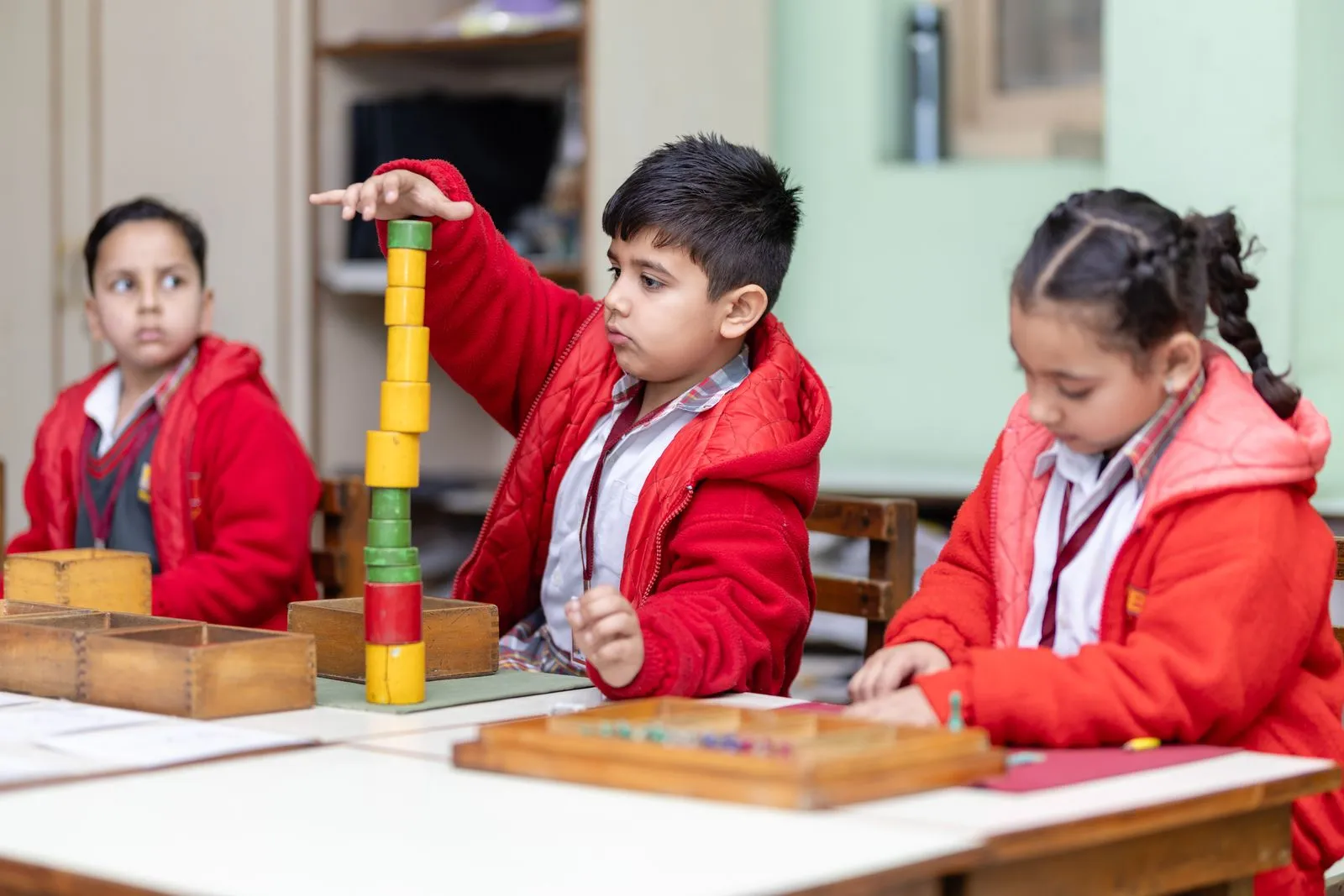
Elementary-age children are ready to ask deeper questions, test ideas, and take greater ownership of their work. A Montessori environment supports that growth by pairing freedom with clear expectations. Students choose from purposeful activities, practice skills over time, and contribute to the classroom community. These routines do more than cover academic content: they give children repeated opportunities to plan, focus, notice results, and adjust their approach. Together, those experiences can shape useful learning habits.
Choice With Clear Boundaries
Choice helps children connect effort to interest, but productive choice is not the same as unlimited choice. In a Montessori classroom, an educator introduces materials, explains how to use them, and sets expectations for completing and restoring work. Students then select from activities they are prepared to use. This structure gives children agency while keeping their attention on learning rather than on deciding what to do next.
Children can strengthen planning by choosing a task, estimating the time it may take, and deciding what to work on afterward. Educators observe whether a student is ready for more independence or needs a narrower set of options. At home, families can use the same principle: offer two appropriate choices, such as which book to read first, and ask the child to follow through.
Practice That Builds Understanding
Purposeful practice gives students time to work with a concept in more than one way. A child might use concrete materials to explore a mathematical relationship, record the result, and later apply the idea to a new problem. In language work, a student may build words, revise sentences, and use new vocabulary in writing. The aim is not repetition for its own sake; each activity should help the learner notice patterns, improve accuracy, or extend understanding.
Useful practice includes feedback and room to try again. Materials may help children check part of their work independently, while an educator can ask questions that guide the next step. When a child makes an error, the response can focus on what to examine or test rather than simply supplying the answer. This supports careful work, persistence, and the ability to recognize when a strategy needs to change.
Responsibility in Daily Work
Classroom responsibilities make independence concrete. Students may gather materials, care for shared spaces, organize completed work, and collaborate on group projects. These tasks show that learning takes place within a community: each person’s actions affect the people and materials around them. Educators model procedures and provide reminders as needed, then gradually step back as children demonstrate readiness.
Responsibility also means reflecting on commitments. A student can review a work plan, identify unfinished tasks, and decide what to address next with an educator’s guidance. This is different from expecting a child to manage everything alone. Clear routines, manageable responsibilities, and regular check-ins help students practice accountability while ensuring that adults remain available to support them.
Habits That Carry Forward
Choice, practice, and responsibility reinforce one another. A student who chooses a task has a reason to begin; sustained practice helps the student work through difficulty; and caring for materials or completing a plan encourages follow-through. Over time, educators can look for observable signs of growth, such as starting work with less prompting, returning to a challenging task, or explaining why a particular approach worked.
Families can support these habits by asking specific, open questions after school: What did you work on? What was challenging? What would you try next? Give children time to answer and avoid turning every conversation into a test of what they remember. When school and home both make room for reflection and age-appropriate responsibility, children can build habits that support learning across subjects and settings.
Montessori supports elementary learners by connecting meaningful choice with sustained practice and real responsibilities. Children gain opportunities to plan, focus, respond to mistakes, and contribute to a community, with adult guidance matched to their needs. To learn how Rochester Montessori approaches these habits in its elementary program, contact the school to discuss your child’s learning needs.